Fossil digs and research
 (96 kb) In fact, weather permitting, fossil digs have been going on almost continuously since the 1880’s.
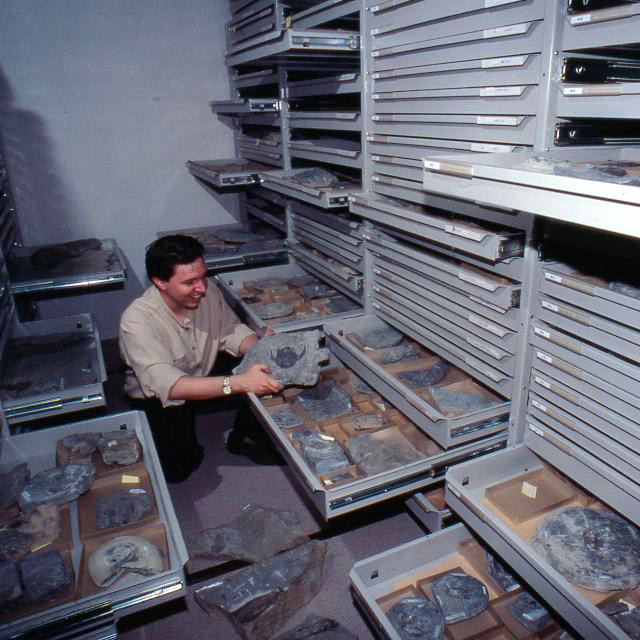
 For quite some time now, about 500 new specimens have been added each year to the collections at the Natural History Museum of the Parc national de Miguasha. The specimens are collected during systematic digs along specific sections of the cliff, or by chance sightings during patrols by the park’s conservation team. The museum collection now includes just over 10,000 specimens from Miguasha.
 (80 kb)In the past, the main goal of fossil collecting was to gain information about a species and its anatomy. Now, fossil digs are much more systematic, and when a fossil is found, aspects other than just species and morphology are given high priority. Fossil hunters take very precise notes about the fossil’s location, the type of encasing sediments, its spatial orientation, its height within the cliff, etc. All these details, meticulously recorded, are clues that allow paleontologists to reconstruct the life of the organism and the environment in which it lived.
Whether the research is conducted on-site at Miguasha or in a laboratory elsewhere, the paleontological findings continue to help decipher the secrets of this unique fossil treasure trove and the mysteries of evolution in general.
Miguasha's laboratory
 Open this page with video (1,4mo)
Note : For best viewing of this site, you will need this plugins: QuickTimeDownload QuickTime
Picture Description
Pictures of laboratories and the Miguasha reserve.
Narration
Research continues at Miguasha, where secrets encased in stone are brought to light. Scientists are attempting to trace the origin of life on earth and understand its evolution.
Fossiliferous rock is subjected to painstaking work in the laboratories. Over the years, palaeontologists using modern technologies continue to study fossiliferous content and the sediments of Miguasha.
The fossils and collection of the Parc de Miguasha constitute a unique source of wealth for Quebec’s natural heritage, in addition to representing a World Heritage Jewel.
Site map | Feedback | Links | Sources | Credits
Fossil digs and research
<< Protecting a unique heritage | The on-site museum >>