
A World Heritage Site

 (72 kb) Fossils extracted from the site since its discovery in 1842 are renowned for their numbers and exceptional preservation. They have led to unique discoveries and a wealth of information, with the promise of much more to come. More than a century of research has sketched a remarkable portrait of this particular Devonian ecosystem and improved our understanding about the transition of aquatic vertebrates into terrestrial animals, indisputably one of the most important pages in the evolution of life on our planet.
 (44 kb)In December of 1999, UNESCO recognized Miguasha’s uniqueness by adding it to the list of World Heritage Sites as the “most outstanding illustration of the Devonian Period”. In the same way the Ancients celebrated their Seven Wonders, the modern world highlights the significant cultural and natural value of sites by awarding them the World Heritage title. These sites include the Pyramids of Giza, the ancient Inca city of Machu Picchu, Stonehenge in England, Colorado’s Grand Canyon, Canada’s Rocky Mountain Parks, and Alberta’s Dinosaur Provincial Park to name but a few.
 (100 kb)Of the more than 830 cultural and natural sites recognized thus far, only fourteen are Canadian. The historical district of Vieux-Quebec and Miguasha are the only sites in Quebec to be included on this prestigious list.
 Site map | Feedback | Links | Sources | Credits
A World Heritage Site
<< The Seigniory of Shoolbred | Miguasha fossils around the world >>




Title: Park road sign
Author: Parc national de Miguasha
Sources: Parc national de Miguasha
Year: 2002
Description:
Road sign at Parc national de Miguasha displaying one of the fossil emblems: Eusthenopteron foordi.
Title: The welcome area at the museum
Author: Parc national de Miguasha
Sources: Parc national de Miguasha
Year: 2003
Description:
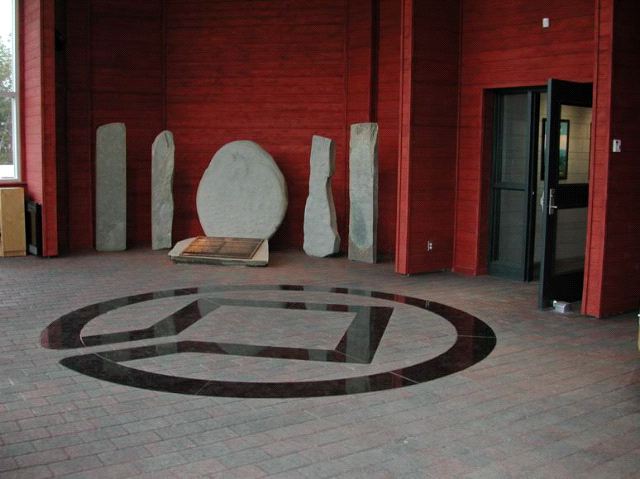
The welcome area at the Natural History Museum. In the background are several rock monoliths from the Miguasha cliff and the official plaque commemorating the addition of the fossil site to UNESCO’s World Heritage List.
Title: Commemorative plaque
Author: Parc national de Miguasha
Sources: Parc national de Miguasha
Year: 2000
Description:
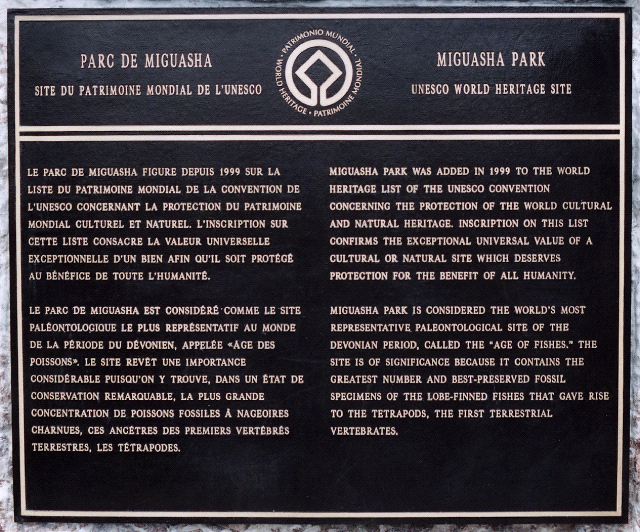
The plaque commemorating the addition of the Parc national de Miguasha to UNESCO’s World Heritage List. The message reads: “Miguasha Park is considered the world’s most representative site of the Devonian Period, called the ‘Age of Fishes.’ The site is of significance because it contains the greatest number and best-preserved fossil specimens of the lobe-finned fishes that gave rise to the tetrapods, the first terrestrial vertebrates.”
MIGUASHA PARK
UNESCO WORLD HERITAGE SITE
Miguasha Park was added in 1999 to the world heritage list of the UNESCO convention concerning the protection of the world cultural and natural heritage. Inscription on this list confirms the exceptional universal value of a cultural or natural site which deserves protection for the benefit of all humanity.
Miguasha Park is considered the world’s most representative paleontological site of the devonian period, called the « Age of fishes. »The site is of significance because it contains the greatest number and best-preserved fossil specimens of the lobe-finned fishes that gave rise to the tetrapods, the first terrestrial vertebrates.
